
How Long Does a Fence Last in Ontario?
Learn how long wood, cedar, pressure-treated, vinyl, chain-link, aluminum, steel and composite fences last in Ontario, plus the conditions that affect useful life.
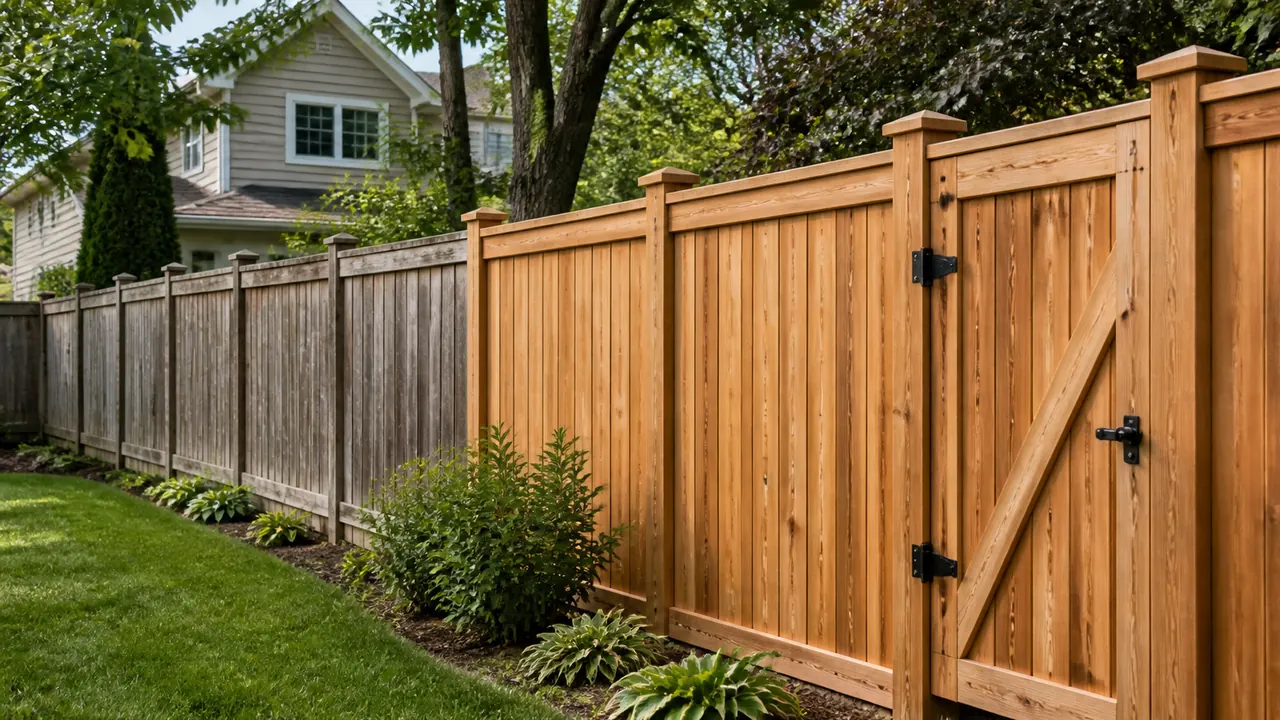
A fence can last less than 10 years or remain useful for several decades. The material matters, but it is only part of the answer.
A well-built cedar fence with dry post locations can outlast a poorly installed cedar fence by many years. A chain-link fence may still have perfectly usable mesh when its gate post begins moving. A vinyl fence does not rot, but that does not prevent a post from shifting or a gate from going out of alignment.
For Ontario homeowners, a useful starting point is:
These are planning ranges, not guarantees. Installation, drainage, product quality, soil, finishing, hardware and repairs can move a particular fence well outside the range.
That distinction matters. Some individual products carry warranties much longer than the ranges above. MicroPro Sienna pressure-treated wood sold in Canada, for example, carries a limited lifetime residential warranty against structural failure caused by fungal decay or termites when its requirements are met. Certain vinyl and aluminum systems also carry limited lifetime warranties. Trex composite fencing currently carries a 25-year residential limited warranty.
A warranty period and the useful life of the complete fence are not the same thing. Posts, gates, rails, hinges, fasteners, finishes and installation conditions still determine how the complete system ages.
Why Fence Lifespan Numbers Should Be Treated as Ranges
Searching for the lifespan of a fence often produces deceptively precise answers.
'Wood lasts 15 years.'
'Vinyl lasts 30 years.'
'Aluminum lasts 50 years.'
Those numbers are useful for comparison, but they should not be treated like expiry dates.
A fence is a collection of components exposed to different conditions. The bottom of a post experiences something entirely different from the top of a fence board. The gate has moving hardware and concentrated loads that the middle of a fence panel never sees. One side of a property may remain damp while another receives sun for most of the day.
Ontario's freeze-thaw conditions add another variable. Ontario government design guidance explains that frost heave depends partly on soil and the amount of water available to freeze. Although that guidance is not written specifically for residential fences, the same soil mechanics help explain why drainage and post installation are so important around fence lines.
This is why you should inspect the fence that is actually in your yard rather than replace it simply because it has reached a certain age.
An 18-year-old fence with stable posts may still have plenty of usable life. A seven-year-old fence with several loose posts and recurring gate problems deserves much closer attention.
How Long Does a Wood Fence Last?
'Wood fence' is too broad a category to assign one useful lifespan.
The species matters. Treatment matters. Whether the posts are appropriate for ground contact matters. Moisture exposure matters. So does maintenance.
For general planning, 10 to 25 years or more covers a large portion of residential wood fencing, but cedar and pressure-treated lumber deserve to be considered separately.
Wood also tends to age visibly.
Boards can fade, check, split or develop minor warping while remaining structurally usable. Appearance alone should therefore not be confused with structural failure.
MicroPro Sienna, a pressure-treated lumber product widely sold in Canada, specifically notes that pressure treatment protects against fungal decay and termite attack but does not prevent natural weathering such as splitting, checking, twisting, warping, shrinkage or swelling.
That is an important distinction when deciding whether an older wood fence needs maintenance, repair or complete replacement.
How Long Does a Cedar Fence Last?
A properly installed Western red cedar fence can reasonably be planned around a 15- to 30-year service window, although individual fences may fall below or above it.
Western red cedar has a natural advantage: the wood itself is resistant to decay and insect attack. The Western Red Cedar Lumber Association describes properly finished and maintained cedar as capable of providing decades of service.
That does not make cedar immune to moisture.
The parts of the fence that stay damp are usually the ones to watch. Posts, the lower ends of boards, horizontal surfaces that hold water and areas buried in vegetation experience considerably greater moisture exposure than an open section that dries quickly after rain.
Fastener choice matters too. Real Cedar specifically recommends corrosion-resistant fasteners because suitable fasteners increase panel service life and avoid rust staining.
A cedar fence can therefore look weathered while remaining perfectly serviceable. Grey colouring by itself is not a reason to replace it.
Look instead for softness or decay at structural connections, loose posts, badly split rails and repeated movement across multiple sections.
How Long Does a Pressure-Treated Wood Fence Last?
For budgeting purposes, 15 to 25 years or more is a useful range for a properly constructed pressure-treated residential fence.
That range should not be mistaken for the limit of treated wood.
Canadian research has demonstrated much longer service life under some conditions. Wood Preservation Canada reports field testing in which pressure-treated material achieved mean service lives exceeding 30 years. The Canadian Wood Council says properly preservative-treated wood can have five to ten times the service life of untreated wood.
Modern residential products can also carry substantial warranties. MicroPro Sienna wood produced and used in Canada has a limited lifetime residential warranty for first owners against structural failure caused by fungal decay or termites.
There is an important catch: correct use still matters.
MicroPro's instructions distinguish between material intended for above-ground exposure and material intended for ground contact. They also require protection of field cuts and drill holes in specified applications. Using an above-ground product where ground-contact treatment is required can compromise the project.
The treatment protects the lumber against biological decay. It does not compensate for poor post placement, bad drainage, weak connections or a gate that continually pulls sideways on its supporting post.
This is one reason two pressure-treated fences installed during the same year can age very differently.
How Long Does a Vinyl Fence Last?
A good vinyl fence can remain serviceable for 20 to 35 years or longer.
Vinyl avoids two of the problems associated with wood: it does not rot and it does not require routine staining. Some residential vinyl fencing products are consequently backed by unusually long warranties.
Freedom Outdoor Living, for example, currently offers a transferable limited lifetime warranty on qualifying residential vinyl fencing in Canada and the United States. The warranty itself should not be interpreted as a promise that every installed component will remain unchanged forever, but it illustrates the service life manufacturers expect from quality PVC systems.
Vinyl has its own failure modes.
Panels can be damaged by impact. Posts can move. Gates can sag if their frames, posts or hardware are inadequate. Replacement can also become inconvenient if a particular profile, colour or product line is no longer available years later.
This is why a 20-year-old vinyl fence should be judged by the condition of its entire system rather than the panels alone.
If the posts remain stable and compatible replacement components are available, an isolated damaged panel does not necessarily justify replacing the complete fence.
How Long Does a Chain-Link Fence Last?
A galvanized or properly coated chain-link fence can commonly provide 20 to 30 years of useful service, and some installations remain functional considerably longer.
The reason is straightforward. There are no wood boards to rot and relatively few large solid surfaces exposed to wind loads.
The steel still requires corrosion protection.
Galvanized chain link uses a zinc coating to protect the underlying steel. Master Halco describes its galvanized systems as resistant to rain, snow and frost, while its standard chain-link systems carry a 12-year limited warranty. Its coloured systems use additional protective coatings and currently carry 15-year limited warranties.
Again, the warranty should not be confused with an expected replacement date.
A chain-link fence can remain structurally useful well past the warranty period.
Typical trouble spots include:
- rust where coatings have been damaged;
- bent top rails;
- loose or stretched mesh;
- leaning terminal posts;
- damaged tension hardware; and
- gates that no longer align.
One useful feature of chain link is that many of these components can be replaced individually.
A damaged section of mesh does not automatically require a new fence if the posts and framework remain solid.
How Long Does an Aluminum Fence Last?
Quality aluminum fencing is a multi-decade system, and 30 years or more is a reasonable planning horizon for good residential products.
Aluminum's major durability advantage is that it does not rust in the same way carbon steel does.
The finish still matters. Modern residential aluminum fencing generally uses a powder-coated or comparable protective finish for appearance and additional environmental protection.
The warranty terms offered by established manufacturers provide useful context. Ameristar's Echelon aluminum fencing receives a multi-stage powder-coat treatment and carries a limited lifetime warranty. Master Halco's Independence aluminum line also carries a transferable limited lifetime warranty for residential installations.
That does not make the fence indestructible.
Aluminum sections can bend after significant impact. Fasteners can loosen. Gates introduce hinges, latches and concentrated load. Posts can still move if the footing or surrounding ground fails.
The metal may be capable of lasting decades while one damaged component needs attention much sooner.
How Long Does a Steel Fence Last?
Modern ornamental steel fencing should not be confused with an unprotected piece of steel left outdoors.
Quality systems combine galvanizing, e-coating, powder coating or other corrosion-control systems to protect the underlying steel.
For a properly coated residential ornamental steel fence, 20 years or more is a sensible planning period, with good systems capable of substantially longer service when their coatings remain intact.
Current manufacturer warranties support that distinction. Fortress offers 20-year warranty coverage on several ornamental steel systems, including protection against specified coating and corrosion failures. Ameristar's Montage residential steel fence uses an 11-stage E-Coat process and carries a limited lifetime warranty.
The vulnerable point is usually damaged protection.
A deep scratch, chipped coating, weld area or repeatedly wet connection can create a location where corrosion begins. Addressing localized coating damage early is easier than allowing corrosion to spread.
Steel's additional strength can make it attractive where the fence needs to tolerate greater physical loads than lightweight ornamental aluminum.
The trade-off is that its corrosion protection deserves attention over its life.
How Long Does a Composite Fence Last?
Composite fencing is generally selected by homeowners who want the solid appearance of a wood privacy fence with less routine refinishing.
A 25- to 30-year or longer planning range is reasonable for established composite fence systems.
Trex, for example, states that its composite fence will not rot, peel or splinter and currently backs Trex Fencing with a 25-year residential limited warranty. Trex has also published a 25- to 30-year average life expectation for its fencing.
Composite does not eliminate structural considerations.
The panels still depend on posts. Gates still depend on frames and hinges. Wind still creates load on large privacy sections.
That means a premium panel material should still be paired with a properly designed support system.
When comparing composite with cedar, pressure-treated wood, vinyl or metal, look at the complete installed system rather than simply asking which panel material has the longest advertised life.
See our Fence Material Comparison for a more complete comparison of maintenance, privacy, appearance and long-term ownership considerations.
What Matters More Than the Headline Lifespan Number?
The material is easy to see. Many of the factors that decide whether the fence lasts are not.
Drainage
Persistent moisture is particularly important around wood.
Water that continually collects at the base of a post creates a different exposure condition than water that drains away and allows the area to dry.
Even treated wood manufacturers distinguish between ordinary above-ground exposure, frequent wetting and ground-contact situations. MicroPro's installation guidance specifically emphasizes proper drainage and correct treatment categories for the intended exposure.
If one section of an otherwise healthy fence fails repeatedly, inspect where the water goes before rebuilding it the same way.
Post Condition
Posts are the structure behind the fence.
A beautiful panel attached to a failing post is still a failing fence.
Check the posts before judging the boards. Push gently on several sections and compare movement. One loose post may be an isolated repair. Movement across a series of posts points to a larger structural problem.
This is especially important when evaluating an older wood fence for Fence Repair.
Replacing boards for appearance while ignoring deteriorated posts does very little to extend the useful life of the fence.
Soil
Soil affects both drainage and movement.
Ontario government engineering guidance notes that frost heave depends on native soil conditions and the volume of water that can freeze within it.
For a homeowner, the practical lesson is simple: two backyards on the same street do not necessarily behave the same way.
A wet low area, recently disturbed soil, poor drainage or a section beside a downspout can create conditions that differ substantially from the rest of the fence line.
When a fence repeatedly leans in the same location, the ground deserves attention along with the fence itself.
Finishing
Finishing does not transform poor lumber into good lumber, but it can help exposed wood cope with water and sunlight.
MicroPro recommends protecting exposed treated wood with a quality water repellent or exterior stain to reduce warping, checking and splitting. Pigmented finishes can also provide additional protection against UV-related colour fading.
Western red cedar guidance similarly recommends appropriate exterior finishes when the goal is to maintain appearance and protect the surface.
The finish then becomes a maintenance item.
Inspect it periodically instead of assuming one coat will protect the fence indefinitely.
For a maintenance schedule by material, see Fence Maintenance.
Hardware
A fence contains more metal hardware than many homeowners notice.
Screws, nails, brackets, hinges, latches and connectors all have to survive outdoors.
Incorrect fasteners can corrode, stain the wood or fail prematurely. Cedar industry guidance specifically recommends corrosion-resistant fasteners, while treated-wood manufacturers require hardware appropriate for exterior use and compatible with the treatment system.
Look at connections during routine inspections.
Replacing a few deteriorating screws or tightening a loose hinge is much cheaper than waiting until movement damages the surrounding wood.
Gate Load
The gate is usually asked to do more than any fixed panel.
It moves every day. Its entire weight hangs from one side. Wind can catch it while open. Children may climb on it. A wide wood privacy gate can place substantial leverage on its hinges and supporting post.
Master Halco describes the gate as the primary moving component and a major source of repair issues in wood fence systems.
A dragging gate is therefore worth fixing early.
The problem may be a hinge adjustment. It may also be an early warning that the gate frame is deforming or the supporting post is beginning to move.
Simply relocating the latch usually does not solve the underlying problem.
Snow Storage
Your fence line should not become the default location for every shovelful of snow from the driveway.
Loose snowfall is one thing. A dense bank created by repeated shovelling, plowing or snow-blower discharge can place prolonged moisture and physical load against a fence.
This matters particularly for solid privacy fencing, older boards and weak posts.
Where practical, avoid creating a large compacted snowbank directly against a fence that is already showing movement.
Vegetation
Plants can hide problems until they become expensive.
Vines, shrubs and dense planting can trap moisture against wood and make it harder to inspect the lower rails and posts.
Large branches can also push directly against panels as plants mature.
You do not need to create a sterile strip along the fence. Leave enough access to inspect it and trim vegetation that is applying significant pressure or preventing wet areas from drying.
Repairs
Small repairs often determine whether you get another year or another decade from the fence.
One damaged cap, rail or board is inexpensive compared with a complete fence. A loose hinge can be adjusted. A localized chain-link section can be retensioned or replaced. A deteriorated wood post can sometimes be replaced while neighbouring sections remain.
The key is repairing the cause.
If a rail repeatedly separates because the post is moving, fastening the rail again is temporary. If a gate repeatedly drops because the frame is distorted, moving the latch lower every year is not maintenance.
Our Fence Repair page explains how isolated failures can be assessed before deciding to replace an entire run.
Signs Your Fence Is Nearing Replacement
Age alone is not the best indicator.
Look for several structural problems occurring at the same time.
An older fence starts becoming a replacement candidate when you see combinations such as:
- multiple loose or leaning posts;
- extensive rot near the bottoms of wood posts or rails;
- repeated repairs in different sections;
- broken or badly distorted panels;
- widespread metal corrosion;
- significant gate-post movement;
- numerous failed connections;
- materials that can no longer be matched for repairs; or
- a layout that no longer serves the property.
One leaning post is usually a repair question.
Six leaning posts, deteriorated rails and a gate that no longer closes properly is a different conversation.
Toronto Fences already takes this approach on its replacement service: replacement becomes more practical when deterioration is spread across the fence rather than concentrated in one repairable area.
How to Extend the Usable Life of a Fence
You do not need to spend every weekend maintaining a fence.
You do need to deal with problems before they spread.
For most properties, a useful routine is to walk the fence line in spring and again after severe weather. Look at the posts first, then rails or panel connections, followed by gates and hardware.
For wood fencing, watch for moisture traps, failed finish and decay near the ground.
For chain link, inspect coating damage, tension, rails and gate alignment.
For vinyl, look for cracks, loose sections and post movement.
For aluminum and steel, inspect connections and damaged finish.
For composite, concentrate on the support structure and gates in addition to the panels themselves.
The goal of Fence Maintenance is not to keep a fence looking brand new forever. It is to catch the $100 problem before it turns into the $5,000 problem.
Fence Repair vs. Replacement
A fence does not need to be either perfect or demolished.
There is a large middle ground.
Repair usually makes sense when:
- damage is concentrated in one or two areas;
- most posts remain stable;
- matching material is available;
- the fence still meets your privacy and layout needs; and
- the repair is likely to provide meaningful additional service life.
Replacement becomes more attractive when:
- structural problems appear across several sections;
- many posts are deteriorating;
- repairs have become repetitive;
- replacement parts are unavailable;
- the fence would still have major weaknesses after the proposed repair; or
- you already want to change the material, height, gate location or privacy level.
There is also partial replacement.
If one side of a backyard fence has failed while the other runs remain solid, rebuilding only the failed section may be completely reasonable. The transition between old and new sections simply needs to be planned properly.
Our Fence Replacement service covers both partial and complete replacement.
Do Not Replace a Fence Just Because It Is Old
A 20-year-old fence is not automatically finished.
A 10-year-old fence is not automatically healthy.
The most useful question is not:
'How old is my fence?'
It is:
'Which parts are failing, and are those failures isolated or widespread?'
Start with the posts. Check the gates. Look at the rails or panel connections. Then consider the material itself.
That inspection tells you much more than an online lifespan chart.
If you are choosing material for a new installation, use lifespan together with maintenance, privacy, appearance and repairability rather than selecting whichever product claims the largest number. Our Fence Material Comparison explains those trade-offs in more detail.
Is Your Fence Reaching the End of Its Useful Life?
If your fence is showing several structural problems at once, send photos of the posts, rails and panels so the condition can be compared with the cost and scope of replacement.
Include photos of the surrounding sections too. A close-up of one broken board does not show whether the posts supporting the rest of the fence are still sound.
Request a Fence Repair or Replacement Estimate or call Toronto Fences at (647) 277-5080.