
Best Time of Year to Install a Fence in Toronto
Compare spring, summer, fall and winter fence installation conditions in Toronto, including ground conditions, scheduling, utility locates and wood staining.
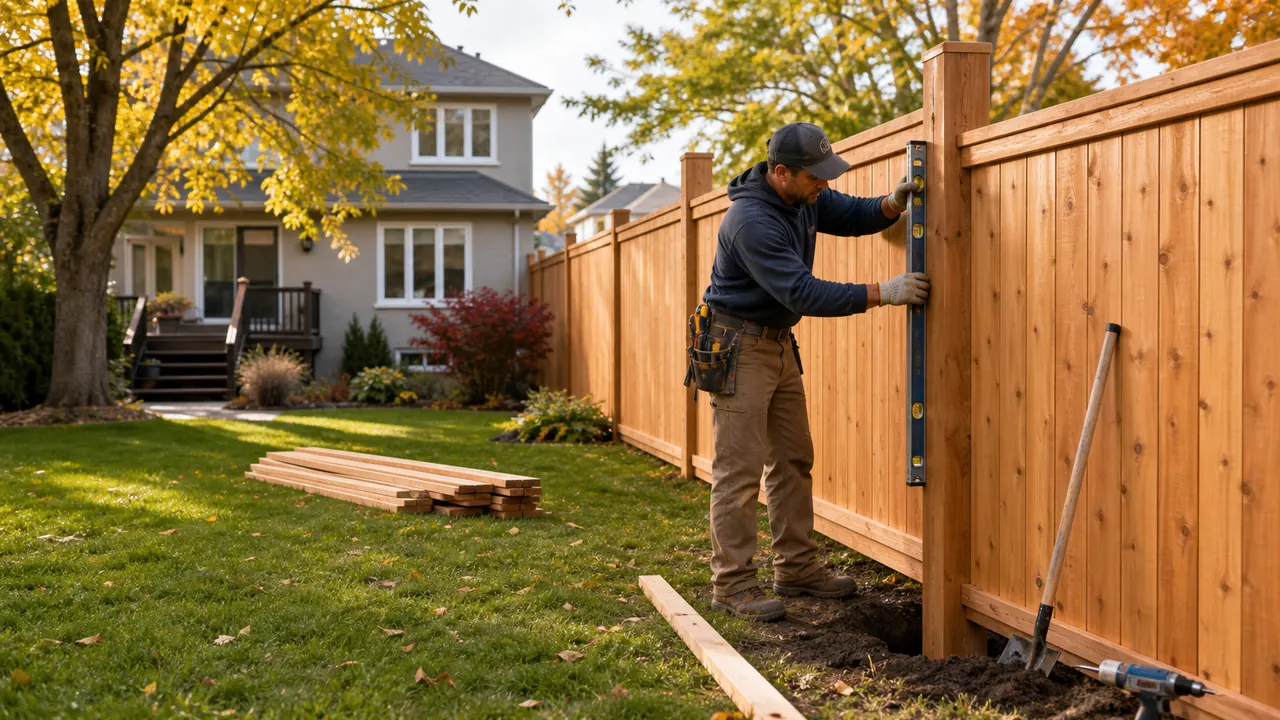
You do not have to wait for the middle of summer to install a fence in Toronto. In fact, summer is not always the easiest time to get the work done.
A fence can be installed through much of the year when the ground can be excavated, the property is accessible and the weather allows posts and footings to be installed properly. Spring, summer and fall are the main installation seasons. Some winter projects are possible too, but frozen soil, snow and cold-weather concrete requirements can change the job considerably.
For most Toronto homeowners, late spring through early fall offers the simplest installation conditions. Fall deserves particular consideration because the temperatures are comfortable for outdoor work and getting the fence finished before winter means the yard is ready when the following spring arrives.
That does not mean you should automatically wait for a particular month. A deteriorating fence may need attention immediately, while someone planning a new backyard six months from now has the luxury of choosing a preferred installation window.
Here is how each season affects a Toronto fence project.
Can Fences Be Installed Year-Round in Toronto?
Technically, fence construction is not restricted to one season. Practically, the condition of the ground matters more than the date on the calendar.
Fence installation normally involves excavating a series of post holes, setting the posts and then building or attaching the fence between them. Those steps become more difficult when the soil is frozen solid, saturated with water or buried beneath significant snow.
Cold weather also matters when concrete is being used around posts. SAKRETE Canada's cold-weather instructions for one of its fast-setting concrete products state that placed concrete must be protected from freezing and should not be used if temperatures will fall below -5°C within 24 hours. The exact requirements depend on the concrete product and installation method being used.
This is why a contractor may be able to work during one mild week in December but postpone the same job during a severe cold spell in March.
There is another scheduling issue that has nothing to do with weather: utility locates.
Ontario One Call specifically lists fence construction as work requiring a locate request. A request must be submitted at least five business days before digging at a single residential property, and excavation cannot begin until the applicable infrastructure owners have responded. Private underground services, such as a line running from the house to a detached garage, pool heater or backyard lighting system, may require a separate private locate.
If you are arranging a new fence installation, allow time for this work rather than treating the installation date as the first step in the process.
Installing a Fence in Spring
Spring is when many Toronto homeowners start thinking about their yards again.
Snow disappears. Gardens reopen. Deck and landscaping projects begin. A fence that looked slightly tired in October can look considerably worse after another winter of wind, moisture and freeze-thaw cycles.
Spring can therefore be an excellent time to install a fence, but conditions vary considerably between March and May.
Workable Ground
Once frost has left the soil and the ground can be excavated normally, fence installation becomes much more straightforward.
That does not necessarily mean waiting until the weather feels warm enough for patio season. A cool April day can be perfectly suitable for construction if the ground is workable and the installation materials can be used within their required temperature ranges.
Starting in spring also gives you the rest of the warm season to use the yard.
If the fence is part of a larger project involving a patio, pool, shed or landscaping, getting the fence layout established early can also make the remaining work easier to coordinate.
Wet Spring Sites Can Cause Problems
Warm air does not automatically mean good ground conditions.
Early spring soil can remain saturated after snowmelt and rain. A low section of a backyard may be soft even when the lawn looks dry from the surface.
Excessively wet conditions create several problems. Equipment can damage the lawn. Mud makes access more difficult. Excavated holes may collect water. Existing landscaping can also suffer more damage when machines and crews repeatedly travel across soft soil.
On some properties it makes more sense to postpone the project for a short period and let the site dry rather than force the installation simply because the calendar says spring has arrived.
Contractor Demand Starts Increasing
Spring is also when the number of homeowners requesting outdoor construction work begins to increase.
If you know you want a fence installed before a particular event - a pool opening, landscaping project, closing date, new dog or start of summer - do not wait until the week you need the fence.
Get the estimate process underway earlier so there is time to determine the layout, choose materials and deal with any site issues before the planned construction date.
Spring verdict: A very good installation season once the frost is out and the property is reasonably dry.
Installing a Fence in Summer
Summer provides the longest days and generally avoids the frozen-ground problems that complicate winter work.
It is also the season when homeowners tend to want their yards the most.
That combination makes summer both convenient and busy.
Long Daylight Helps Construction
Longer daylight gives crews more usable working time and makes site conditions easier to see.
The ground is generally accessible, gardens and property boundaries are visible, and there is less chance of having a fence line hidden beneath snow.
For straightforward installations, summer provides predictable working conditions much of the time.
There can still be delays. Heavy rain can make a site unsuitable for excavation, while severe heat can affect working conditions and some construction materials. A summer date should therefore never be treated as weather-proof.
Summer Is a Popular Time for Fence Projects
This is the time of year when people are using pools, patios and backyards. It is also when many homeowners realize they want more privacy or need to replace a fence that did not survive the previous winter particularly well.
The result can be less scheduling flexibility during popular periods.
There is no universal contractor lead time. It varies with the company, fence type, material availability and size of the project. If having the fence completed before a particular summer date is important, however, requesting estimates well beforehand is safer than assuming an installer will have immediate availability.
Consider the Rest of Your Landscaping
A fence installation is not a no-impact project.
Workers need access to the fence line. Old fencing may have to be removed. Post-hole equipment has to move through the property. Soil is excavated. Materials need somewhere to be staged.
That matters if your backyard is already full of annual flowers, patio furniture, children's equipment or newly installed landscaping.
If you are planning a complete backyard renovation, think about the sequence of the work rather than scheduling each contractor independently.
In many cases, it makes sense to complete the fence before delicate landscaping immediately beside it. At the very least, make sure the fence contractor has a usable path from the street or driveway to the work area.
Summer verdict: Excellent installation conditions, but potentially less scheduling flexibility and more conflict with an actively used or landscaped backyard.
Installing a Fence in Fall
Fall may be the most overlooked time to build a fence in Toronto.
September and much of October can offer comfortable outdoor working conditions without the urgency homeowners often feel at the beginning of summer.
The important issue is not simply temperature. The project still has to be completed while excavation and any concrete work can be performed properly.
Cooler Temperatures Can Be Comfortable for Construction
Fence crews perform physical work outdoors for most of the day. Moderately cool weather can be easier to work through than a hot, humid afternoon in July.
The yard may also be used less heavily once summer is over, reducing the inconvenience of having a portion of it occupied by materials and construction activity.
If landscaping around the fence is being removed or changed anyway, fall may be a convenient time to combine the work.
Finish the Fence Before Next Summer
A fall installation also shifts the inconvenience away from the period when you most want to use the yard.
Instead of starting May by calling contractors, comparing fence materials and arranging access, you start the following spring with the fence already installed.
That is useful if next year's plans include a patio, garden, pool area or other outdoor improvements.
Do not leave the project unnecessarily late, though. November weather in Toronto can change quickly. A project that is straightforward in early fall may encounter frozen ground, snow or temperature restrictions several weeks later.
Fall verdict: Often one of the best times to install a fence, particularly if you want the property ready before the following spring.
Installing a Fence in Winter
Winter fence installation is possible in some situations, but it should not be treated as equivalent to a May or September project.
The biggest issue is below your feet.
Frozen Ground Changes Post Installation
Fence posts rely on proper excavation and stable installation below grade.
When soil freezes deeply, ordinary post-hole excavation becomes more difficult. Specialized equipment may be capable of working through some frozen soil, but that does not automatically make every winter installation a good idea.
Concrete introduces another concern. Cold-weather products and procedures have specific temperature and curing requirements. For example, SAKRETE Canada's Fast Set instructions require newly placed material to be protected against freezing for at least 24 hours.
A contractor therefore has to evaluate actual site and weather conditions rather than simply deciding that winter installation is always possible.
Snow Can Hide Important Parts of the Property
Snow is not just inconvenient.
It can conceal gardens, grade changes, retaining edges, old concrete, landscape borders and other features close to the proposed fence line.
It can also make backyard access difficult. A narrow Toronto side yard that is manageable during summer may become much harder to move materials through after repeated snowfall and ice accumulation.
Clearing the fence line does not necessarily solve every problem because frozen or snow-covered ground can still make layout and excavation more difficult.
Some Winter Fence Work Remains Possible
Winter does not mean all fencing work stops.
A stretch of mild weather may leave the ground workable. Certain repairs involve mostly above-ground components. Gates, boards, rails or panels may be serviceable without rebuilding every footing.
A contractor may also be able to perform preliminary measurements and planning during winter so the full project is ready when conditions improve.
The decision has to be based on the property and the weather at the time.
Winter verdict: Possible under the right conditions, but not the season to assume installation will proceed regardless of weather.
So, What Is the Best Month to Install a Fence in Toronto?
There is no single month that wins every year.
Toronto weather does not follow an exact construction calendar. April can occasionally provide beautiful dry conditions, while an unusually wet May can leave a backyard difficult to work in. October can feel like summer one week and produce freezing overnight temperatures not long afterward.
For most projects, a useful way to think about the year is:
- Late spring: strong choice once the soil has dried enough to work.
- Summer: dependable access and long days, but popular scheduling period.
- Early fall: excellent alternative with comfortable working conditions and less conflict with summer yard use.
- Late fall and winter: increasingly dependent on ground conditions, snow and temperature.
If there is no urgent reason to build immediately, May through October generally provides the broadest practical installation window, with the exact date chosen around weather and contractor availability.
The condition of your property still matters more than the month printed on the calendar.
Best Time to Request Fence Estimates
Request an estimate before you reach the point where you need the fence immediately.
A proper fence project may require more than selecting a colour and booking an installation day. Depending on the property, you may need to determine:
- approximate fence length;
- fence and gate locations;
- the material and style;
- whether an existing fence needs removal;
- access for equipment and materials;
- conflicts with landscaping;
- property-line questions;
- pool enclosure requirements; and
- underground utility locations.
Toronto's Fence Bylaw also establishes rules dealing with matters such as fence height, materials, location and visibility around driveways. Pool enclosures have additional requirements and require an approved Zoning Certificate and Pool Fence Enclosure Permit.
Utility locating needs to be included in the schedule as well. Ontario One Call says a residential locate request must be submitted at least five business days before excavation, and work cannot begin until all notified infrastructure owners have responded.
For a project you would like completed during spring or summer, beginning the estimate process several weeks before your preferred installation period gives you more room to compare materials, refine the scope and deal with these preliminary steps.
If you are considering wood, vinyl, chain link, aluminum or another material, review the Fence Installation options before deciding based only on appearance.
Best Time to Replace a Failing Fence
A failing fence changes the timing calculation.
If the fence is simply faded or outdated, waiting for a convenient installation season is reasonable.
If several posts are loose, large sections are leaning, boards are falling into a neighbour's property or a gate no longer provides the enclosure you depend on, the condition of the fence may matter more than getting the perfect month.
Start by determining whether the problem is isolated.
One failed post does not automatically mean an entire fence needs to be rebuilt. Widespread post movement, extensive rot or repeated failures across several sections can make Fence Replacement more sensible than paying for one repair after another.
There is also a practical advantage to assessing a failing fence before winter rather than after it collapses.
Wind, snow loads and repeated freeze-thaw movement can turn a marginal section into a failed section. If you notice significant movement in late summer or fall, that is a good time to determine whether the fence can be repaired, reinforced or should be replaced.
For fencing that performs a safety function, do not wait for an ideal season simply because spring or fall would normally be more convenient. Pool fencing in Toronto is subject to specific enclosure requirements, for example, so a damaged pool barrier deserves prompt attention.
Best Time to Stain a New Wood Fence
Installing a wood fence and staining it are two different scheduling decisions.
New pressure-treated lumber can contain substantial moisture. Applying a finish before the wood is ready can reduce penetration and produce an uneven result.
The Canadian Wood Preservation Council recommends protecting exposed wood with an appropriate weather-resistant finish, but it also notes that pressure-treated lumber may still be damp when purchased. Its advice is to wait until the wood is dry enough for the finishing product being used and to follow that product manufacturer's instructions.
This is more useful than following a rule such as 'always wait six months.'
Drying time changes with the lumber, weather, sun exposure and how wet the material was when installed.
One simple check is the water-drop test. Put several drops of water on the wood. If the water readily absorbs rather than remaining beaded on the surface, the wood may be ready to accept a penetrating finish. Treated-wood guidance recommends this approach rather than relying solely on age.
Weather during application matters too. Sherwin-Williams recommends staining fences on a dry, relatively low-humidity day and lists an application temperature range of roughly 4°C to 32°C for its general fence-staining guidance. Individual products have their own requirements and should take precedence.
For Toronto homeowners, that often makes late spring, summer or early fall useful staining periods, provided:
- the wood is sufficiently dry;
- rain is not expected during the required drying period;
- temperatures fall within the stain manufacturer's range; and
- the surface is clean and properly prepared.
Do not automatically stain a newly installed pressure-treated fence the following weekend.
For a more detailed explanation, see When to Stain a New Fence and our Fence Maintenance guide.
The Best Time Depends on What You Are Trying to Accomplish
If you simply want the easiest installation conditions, target the period from late spring through early fall.
If you want the yard ready before summer, start planning during winter or early spring.
If you want to avoid disrupting a backyard that is heavily used during July and August, consider fall.
If the fence is already failing, get it assessed rather than waiting several months for a supposedly perfect installation season.
And if you are installing a new wood fence, remember that the best day to build the fence and the best day to stain it may be completely different.
Toronto gives homeowners a reasonably long fence-building season. The important part is using that flexibility rather than waiting until everyone wants the same installation date.
Planning a Fence Installation in Toronto?
If you have a target season in mind, request an estimate early enough to compare materials and plan around access, utility locates and existing-fence removal.
Tell us the approximate fence length, the material you are considering, the number of gates and whether an old fence has to come down.
Request a Fence Estimate or call Toronto Fences at (647) 277-5080.